
Türkiye-based glass and ceramics sourcing, from anywhere in the world
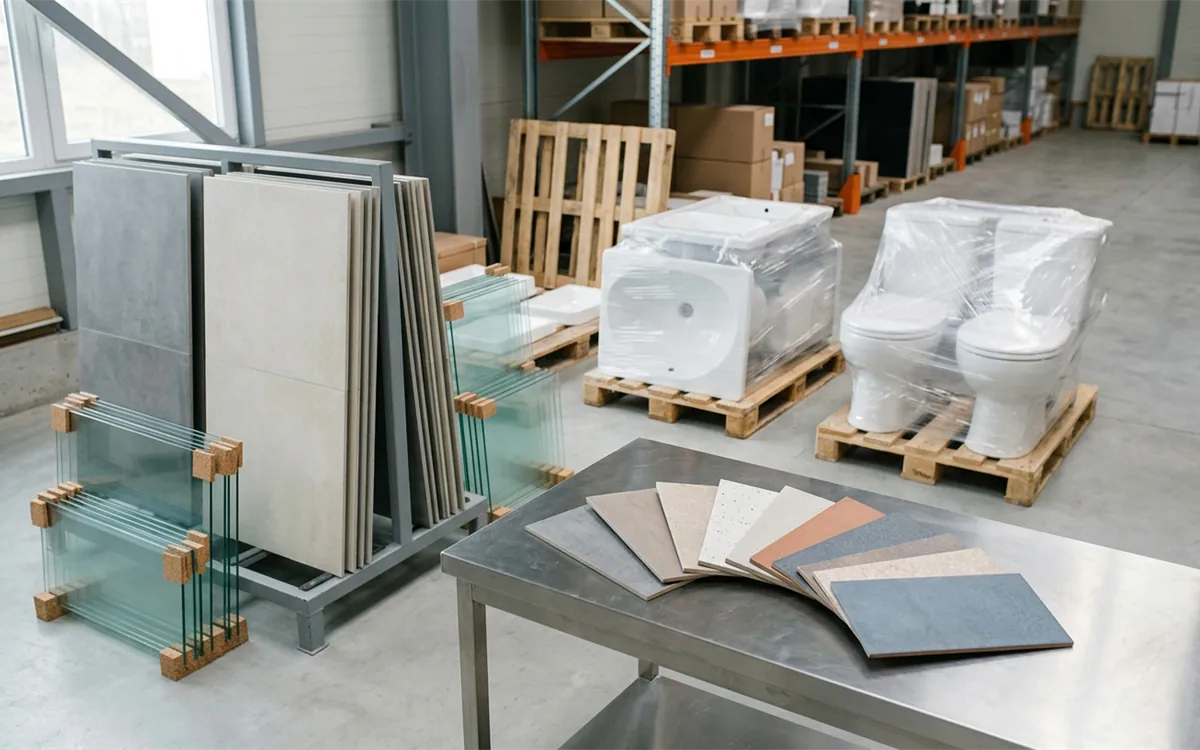
We run the sourcing process for ceramic and porcelain tiles, sanitary ware, flat glass, glass packaging and tableware. For fragile cargo we issue the palletising, corner protection and wrapping instructions before shipment, and send you the loading photographs. We look at Türkiye first; if the product is not available here, we source it from the world's other production centres we source it.
- Documents requiredCE declaration of performance (DoP), EN standard test report, food contact declaration
- SamplesColour and shade samples; in tiles the batch (calibre) number is approved in writing
- PackagingPalletising, corner protection, wrapping and strapping instructions issued before loading
- Sourcing geographyBozüyük, Eskişehir, Uşak, Kütahya; the EU, Far East and North Africa where needed
What do we source in the glass and ceramics group?
Some of these headings are construction products and some are consumer goods — their documentation regimes work differently. You can also raise a request for a product you cannot see listed.
Ceramic and porcelain tiles
Floor and wall tiles, rectified porcelain tiles, glazed granite, technical porcelain, decorative tiles.
Facade and technical ceramics
Facade cladding tiles, clinker brick, pool ceramics, industrial floor tiles, porcelain slabs.
Sanitary ware
Washbasins, WC pans, cisterns, urinals, shower trays, bathtubs, bathroom furniture and ceramic accessories.
Taps and bathroom fittings
Mixer taps, shower systems, traps, drains, mirrors, towel rails and bathroom accessories.
Flat glass
Float glass, frosted and patterned glass, mirror, laminated glass, tempered glass, insulating glass.
Architectural and facade glass
Insulating glass units, coated (low-e) glass, facade glass, door and shower enclosure glass.
Glass packaging
Bottles, jars, perfume and cosmetic bottles, pharmaceutical vials, caps and seals.
Tableware and kitchenware
Tumblers, plates, bowls, serving sets, borosilicate ovenware, porcelain and glass dinner sets.
Decorative glass and ceramics
Vases, figurines, candle holders, lighting glass, handmade decorative items, tile panels and ceramic murals.
Adhesives and grouts
Tile adhesive, grout, silicone, waterproofing mortar, levelling screed, tile trims and profiles.
Glass fibre and technical glass
Glass fibre reinforcement, glass wool, laboratory glassware, heat-resistant technical glass.
Natural stone and engineered surfaces
Marble, travertine and granite slabs; quartz composite worktops, mosaic and ceramic countertop surfaces.
Which documents are required for glass and ceramics?
This group largely counts as construction products , so a declaration of performance is mandatory for sales into Europe. On the tableware and packaging side, food contact legislation applies instead. We establish which your product needs at the request stage.
-
CE marking and declaration of performance (DoP) Mandatory for tiles, flat glass and architectural glass sold into Europe. The declaration shows which harmonised standard the product is assessed against and which performance values it meets.
-
EN standard test report Water absorption, breaking strength, abrasion resistance and slip resistance for tiles; thickness tolerance and optical defects for flat glass. From an accredited laboratory, matched to the batch or production period.
-
Food contact compliance Lead and cadmium release testing is required for tableware, glass packaging and glazed ceramics; a declaration of compliance is required in Europe and FDA requirements apply in the United States.
-
Quality and environmental management systems ISO 9001 and ISO 14001; frequently required on large projects and public tenders. One of the first conditions we check when selecting a manufacturer.
-
Batch, calibre and shade information Different batches of the same tile will vary in shade and size (calibre). The order is opened with the shade and calibre number stated; this information is essential if the order may be topped up later.
-
Origin and movement documents Certificate of origin, A.TR for the EU, EUR.1 for countries with a free trade agreement. Origin matters especially here because some countries apply additional duties on ceramic tiles.
Typical working terms
The table below shows customary practice in the glass and ceramics group; the terms applying to each order are set out in the written quotation.
| Packaging | Tiles boxed and palletised, wrapped and strapped; sanitary ware boxed with foam and cardboard protection; flat glass on wooden A-frames or in crates with interleaving paper. Corner protection is mandatory on fragile items. |
|---|---|
| Loading unit | This group is heavy: a container usually reaches its weight limit before it fills by volume. Pallet dimensions and the stowage plan are built around the container weight limit, and on mixed loads heavy goods go at the bottom. |
| Delivery terms | EXW, FOB, CFR, CIF and, on request, DAP / DDP. For fragile cargo we separately check that the insurance cover matches the delivery terms. |
| Samples | Colour, shade and surface samples are sent and approval is taken in writing. Tile orders are opened with the shade and calibre number; the approved sample is kept as the reference. |
| Lead time | Short for ex-stock products; longer where a special size, custom decoration or tooling is required. Production and loading dates are stated separately in the quotation. |
| Quality control | Calibre, shade, thickness and surface defects are checked before loading; the stowage and packaging are photographed and sent to the buyer. Inspection by an independent company on request. |
Where do we source glass and ceramics from?
In this group freight is a large part of the product price. Sourcing is therefore decided not on unit price alone but on total cost to the destination port .
Depth of production
Türkiye is one of Europe's major producers of ceramic tiles, sanitary ware and glass packaging. Bozüyük, Eskişehir, Uşak and Kütahya are the centres of that production.
What this means in practice is being able to obtain quotes from more than one factory for the same product and to meet requests for special sizes or decoration.
Distance = freight advantage
This group is heavy and bulky. A container of tiles reaches its weight limit before it fills by volume — so the unit cost of freight rises directly with distance.
Proximity to Europe, the Middle East, North Africa and the Black Sea basin makes a serious per-kilo difference against distant sources. We show the comparison in the quotation.
Projects and top-up orders
On hotel, residential and chain retail projects the order does not finish in one go; months later a top-up from the same shade is needed.
We therefore record the shade and calibre number and, where possible, reserve a project allowance up front. A shade that cannot be found later becomes a visible defect in the project.
Sourcing from outside Türkiye
The Far East can be better for very high volume standard tiles, and Europe for certain technical glass and custom decoration. For these items we use our global supplier network .
Whatever the source, we still issue the packaging and stowage instructions and still send you the loading photographs. With fragile cargo, that is where the real difference lies.
Most common questions in glass and ceramics sourcing
What do you do about transit damage on fragile goods?
We issue the packaging and stowage instructions before shipment: pallet layout, corner protection, wrapping and strapping, heavy goods at the bottom, void fill between pallets.
The loading is photographed and sent to you. In the event of damage those photographs evidence that loading was done correctly and make the insurance process easier. We also check separately that the insurance cover matches the delivery terms.
How is the shade variation problem handled on tile orders?
Variation in shade and size (calibre) between production batches of the same tile is normal; it is a fact of production, not a defect.
The solution is at order stage: the shade and calibre number are written into the order and a single project is served from one batch. If a top-up is likely, we reserve a project allowance up front — the same shade may not be available months later.
Is CE marking mandatory for sales into Europe?
It is for products classed as construction products: ceramic tiles, flat glass and insulating glass units fall in scope. The manufacturer must prepare a declaration of performance (DoP) and the product must carry the CE mark.
Tableware and decorative items are not in scope; food contact legislation and general product safety apply to them instead. State the destination country in your request and we will work out what each product needs.
Can we have special sizes or custom decoration produced?
You can. Special sizes and decoration in tiles, custom colours in sanitary ware and moulded bespoke bottles in glass packaging are all possible.
Because these need moulds and print rollers, both the lead time and the minimum quantity go up. Who pays for the tooling and who keeps it is written into the contract — skipping that clause causes trouble later.
Do you provide food compliance certification for tableware and glass packaging?
We do. Lead and cadmium release testing is carried out on glazed ceramics and decorated glassware, and the result is provided as an accredited laboratory report.
A declaration of compliance is required for sales into Europe and FDA requirements for the United States. Whether the decoration sits on the food contact surface is part of that assessment.
Why does the container close before it is full?
Because this group is heavy. Once tiles, natural stone and glass are palletised, the container's weight limit is reached before its volume limit. A container that looks empty can in fact be fully loaded.
We therefore build the stowage plan around the weight limit and balance heavy goods with light ones on mixed loads. Otherwise you either exceed the container limit or pay freight for empty space.
How do you work on project-based bulk purchases?
We price from the bill of quantities: how many square metres of each product, in which size and which shade. The delivery schedule is split to match the site calendar.
The real risk on projects is topping up: over-ordering sits in the warehouse, under-ordering creates shade variation risk. We set the wastage allowance together, by product group.
Will you source a glass or ceramic product that is not available in Türkiye?
We do. The Far East can lead on very high volume standard tiles, and Europe on certain technical glass and custom decoration. For these items we use our global supplier network .
In this group a change of origin affects not only the price but also the freight and the customs duty ; some countries apply additional duties on ceramic tiles. We show the comparison in writing on a total-cost-to-destination basis.
Glass and ceramics sourcing: tell us what you need, we will find the manufacturer.
Send us the product, target volume and delivery country on whichever channel suits you; we respond within 24 hours with a price range and an estimated lead time.